
Table of Contents
- Why Gravity Feeders for Dogs Suit Busy Households
- Key Features to Compare in the Best Gravity Feeders for Dogs
- Pros and Cons of Gravity Dog Feeders
- Gravity vs Automatic Dog Feeders: Which Fits Your Schedule?
- How to Clean Gravity Dog Feeders Without Damaging Them
- Travel and Outdoor Use: Stability, Packing, and Pest Prevention
- Transitioning Your Dog to a Gravity Feeder
- Frequently Asked Questions
Last Updated: October 1, 2026
Why Gravity Feeders for Dogs Suit Busy Households
The best gravity feeders for dogs solve a specific problem: they keep food and water available without batteries, timers, or daily refilling. For working professionals with long commutes, that reliability matters more than any app-connected feature. This guide breaks down what separates a dependable gravity feeder from one that clogs, tips, or leaks.
A gravity feeder is a container that releases food or water into a bowl as your dog eats or drinks, using nothing but gravity and a simple chute or valve. No power source, no programming, no failure points from dead batteries.
Here's the appeal. You fill it in the morning, head to work, and your dog eats on their own schedule. Parents juggling young children and a pet find this removes one daily task from an already full routine. Pet owners who travel for a day or two get peace of mind knowing food and water stay available.
The trade-off is real, though, and we'll cover it honestly. Gravity feeders suit free-feeding dogs, not pets on strict portioned schedules. Keep reading, and you'll know exactly which setup fits your household.
Key Features to Compare in the Best Gravity Feeders for Dogs
Capacity, material, and design decide whether a feeder works for your dog or becomes a daily annoyance. Three specifications matter most: how much it holds, what it's made of, and whether it resists spills.
Capacity, Material, and Spill-Proof Design
Food capacity typically ranges from a few cups for small breeds to over ten pounds for large dogs. Match capacity to how long you're away, not to the biggest number on the box.
Material durability comes down to two choices. Stainless steel bowls resist chewing, scratching, and bacteria buildup. BPA-free plastic costs less and weighs less.
Spill-proof design separates good feeders from frustrating ones. Look for a non-slip base and a clog-resistant chute.
| Feature | What to Look For | Why It Matters |
|---|---|---|
| Food capacity | 4-15 lbs depending on breed | Fewer refills during long workdays |
| Bowl material | Stainless steel or BPA-free plastic | Durability and easy cleaning |
| Spill-proof design | Non-slip base, sealed lid | Less mess, less waste |
| Chute design | Clog-resistant, adjustable | Consistent food flow |
Indoor vs. Outdoor and Multi-Pet Suitability
Indoor feeders prioritize appearance and easy-clean surfaces. Outdoor feeders need weather-resistant construction and a heavier base to handle wind and curious wildlife.
Multi-pet households face a different challenge. One gravity feeder shared by three dogs means the fastest eater controls the supply. If your dogs eat at wildly different paces, separate feeders work better than one large unit.
Pros and Cons of Gravity Dog Feeders
The pros and cons of gravity dog feeders come down to convenience versus control. Understanding both sides helps you decide before you buy.
Pros:
- No batteries, timers, or power cords to fail
- Food and water stay available during long absences
- Simple mechanical design means fewer breakdowns
- Lower maintenance than electronic automatic dispensers
- Travel-friendly since nothing needs charging
Cons:
- No portion control, so free-feeding dogs can overeat
- Wet food doesn't work in gravity systems
- Multi-pet homes can't guarantee equal access
- Requires regular cleaning to prevent stale food and bacteria
Gravity vs Automatic Dog Feeders: Which Fits Your Schedule?
Gravity vs automatic dog feeders is really a question about your schedule and your dog's eating habits. Gravity feeders release food passively as your dog eats. Automatic feeders dispense measured portions on a timer, usually with battery or plug power.
Choose a gravity feeder if your dog self-regulates their eating and you want zero electronics to maintain.
How to Clean Gravity Dog Feeders Without Damaging Them
How to clean gravity dog feeders properly comes down to frequency and the right technique. A quick weekly routine prevents stale kibble, bacteria, and clogs.
- Empty remaining food into a sealed container
- Disassemble the hopper, chute, and bowl
- Wash plastic and stainless parts in warm soapy water
- Scrub the chute with a bottle brush to clear compacted kibble
- Rinse thoroughly and dry completely before reassembly
- Wipe the exterior and check the base for cracks
Travel and Outdoor Use: Stability, Packing, and Pest Prevention
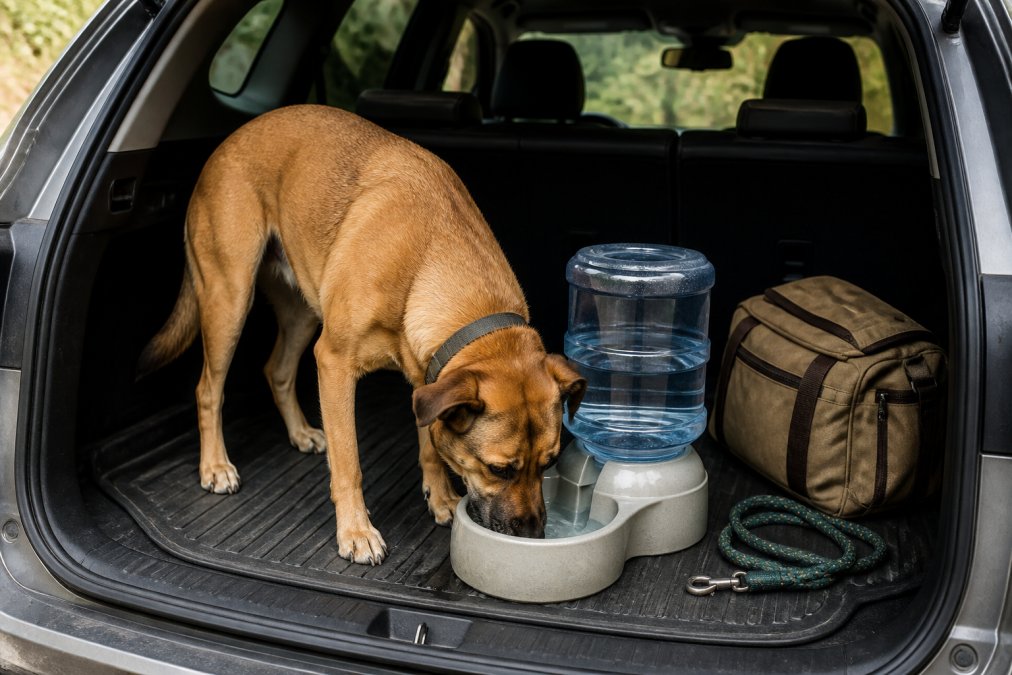
Travel and outdoor use demand more from a gravity feeder than a kitchen corner ever will. Stability, packing, and pest prevention decide whether the system survives a road trip. Most guides treat travel as an afterthought; this section treats it as the primary use case, because that's where gravity feeders fail most often.
Securing a Gravity Feeder in a Vehicle or Crate
A loose feeder becomes a projectile in a sudden stop. The fix is mechanical, not magical: place the feeder on a high-friction rubber mat or shelf liner, then wedge it between heavier items like a cooler or duffel bag so it cannot slide forward. For crate travel, choose a feeder with a wide, flat base that fits the crate floor without tipping when your dog steps on the rim.
Weight-to-Portability Ratio: The Number Most Buyers Ignore
The best travel feeder is not the lightest or the largest, it's the one with the best capacity-to-weight ratio for your trip length. A feeder that holds 10 pounds of kibble but weighs 4 pounds empty is a poor travel choice because you're hauling plastic, not food. A mid-size unit that holds 6 pounds and weighs 1.5 pounds empty gives you more usable capacity per pound of luggage.
Pest Prevention for Outdoor and Travel Use
Ants and rodents find open food fast. A sealed lid is the first line of defense, but it only works if the lid gasket is intact and the chute closes fully between meals. For ants, create a physical barrier: place the feeder inside a shallow tray of water or on a raised platform with petroleum jelly smeared around the legs.
Transitioning Your Dog to a Gravity Feeder
Transitioning your dog to a gravity feeder takes about a week for most pets, but the real risk isn't confusion, it's overeating. A dog that has never self-regulated will often empty the hopper on day one, then vomit or develop diarrhea. The transition plan below prevents that.
The 7-Day Transition Plan
Start by placing the gravity feeder next to your dog's current bowl. Let them investigate it without pressure. For the first two days, keep offering their regular measured meals in the old bowl while the gravity feeder stays empty. This builds familiarity without changing their diet.
Preventing Overeating and Bloat
Some dogs simply cannot free-feed. Breeds prone to bloat, including Great Danes, Standard Poodles, and German Shepherds, should not use gravity feeders without veterinary approval, because free-feeding can increase the risk of gastric dilatation-volvulus (GDV). If your dog inhales food, watch for these signs during the transition: pacing, retching without vomiting, a distended abdomen, or excessive drooling. Stop the transition and call your vet if any appear.
Picky Drinkers and Water Transition
Water is easier than food. Most dogs accept a gravity waterer within a day. Rinse the reservoir daily during the first week so the water tastes clean and your dog builds the habit. If your dog refuses the waterer, try filling it with the same water you normally use, a sudden change in water source can put some dogs off.
Frequently Asked Questions
Are gravity feeders safe for dogs who eat too fast?
Gravity feeders release food as your dog eats, which can encourage fast eating in some dogs. If your dog gulps food, a gravity feeder may not slow them down. Some models include a chute design or maze-like interior that limits how quickly kibble drops. For very fast eaters, a portion-control automatic feeder or a slow-feed bowl may be safer. Always monitor your dog during the first few days and consult your vet if you notice bloating or vomiting.
What are the common problems with gravity feeders?
The most common issues include clogged chutes when kibble is too large or oily, food spoilage in humid conditions, and spills if the base is not non-slip. Some dogs learn to tip the feeder over to get more food. Choosing a model with a clog-resistant chute, BPA-free hopper, and weighted base reduces these problems. Clean the feeder weekly to prevent mold and bacteria buildup, especially around the dispensing opening.
How do gravity feeders work for dog food and water?
A gravity feeder stores kibble or water in an elevated hopper. When your dog eats or drinks, the level in the bowl drops, and gravity pulls more food or water down through a chute or valve. There are no batteries or timers. The system relies on a simple seal to stop flow when the bowl is full. This makes gravity feeders a reliable, non-electric option for free-feeding, though wet food is not suitable because it can clog the mechanism.
Can gravity feeders be used for long-term travel?
Yes, with planning. For trips of 2-3 days, choose a feeder with enough food capacity for your dog's daily intake plus a buffer. Water capacity matters more in heat. Pack the feeder so the hopper stays upright, and use a non-slip base or strap it down. For outdoor travel, select a weather-resistant model and place it in a shaded, pest-resistant spot. Always test the feeder at home before relying on it away from home.
Finding the right feeding setup shouldn't add stress to an already busy week. FEASTY PAWS builds gravity-fed food and water systems designed by pet parents, for pet parents, with no batteries or timers to manage. Every feeder ships in two business days and comes with a 30-day money-back guarantee, so you can try it without risk. Get started with FEASTY PAWS and give your dog reliable access to food and fresh water while you're away.