
Table of Contents
- Why Travel Demands a Different Kind of Pet Feeder
- Quick Comparison: Gravity vs Electronic Pet Feeders for Travel
- Gravity Pet Feeder Benefits for Traveling Pet Parents
- How to Keep Pet Food Fresh While Traveling
- Maintaining Pet Feeder Hygiene on the Road
- Choosing the Best Pet Feeder for Travel: What Actually Matters
- Common Mistakes to Avoid When Traveling With a Pet Feeder
- Conclusion: Stress-Free Feeding on Every Trip
- Frequently Asked Questions
Last Updated: September 29, 2026
Why Travel Demands a Different Kind of Pet Feeder
The best pet feeder for travel is a gravity-fed model that needs no batteries, no timers, and no power outlet, because the places you sleep on the road rarely offer a socket next to your pet's bowl. This guide from FEASTY PAWS covers what holds up over a weekend away, from hopper capacity to anti-jam design.
Quick Comparison: Gravity vs Electronic Pet Feeders for Travel
Gravity feeders win for travel because they have no power dependency, no programming, and no connectivity to troubleshoot in a hotel with weak Wi-Fi. Electronic feeders offer scheduled meals, but that convenience comes with batteries, apps, and failure points that matter more when you are far from home.
| Feature | Gravity Feeder | Electronic Feeder |
|---|---|---|
| Power source | None required | Batteries or power adapter |
| Setup time | Under 2 minutes | 10-20 minutes plus app setup |
| Portion control | Self-regulated by pet | Programmed portions |
| Wi-Fi connectivity | Not applicable | Required for most features |
| Failure points | Food blockage only | Battery, app, motor, connectivity |
| Best for | Weekends and short trips | Strict scheduled feeding at home |
Gravity Pet Feeder Benefits for Traveling Pet Parents
Gravity pet feeder benefits start with one fact: there is nothing to charge, sync, or remember before you walk out the door. You fill the hopper, place the bowl, and physics handles the rest.
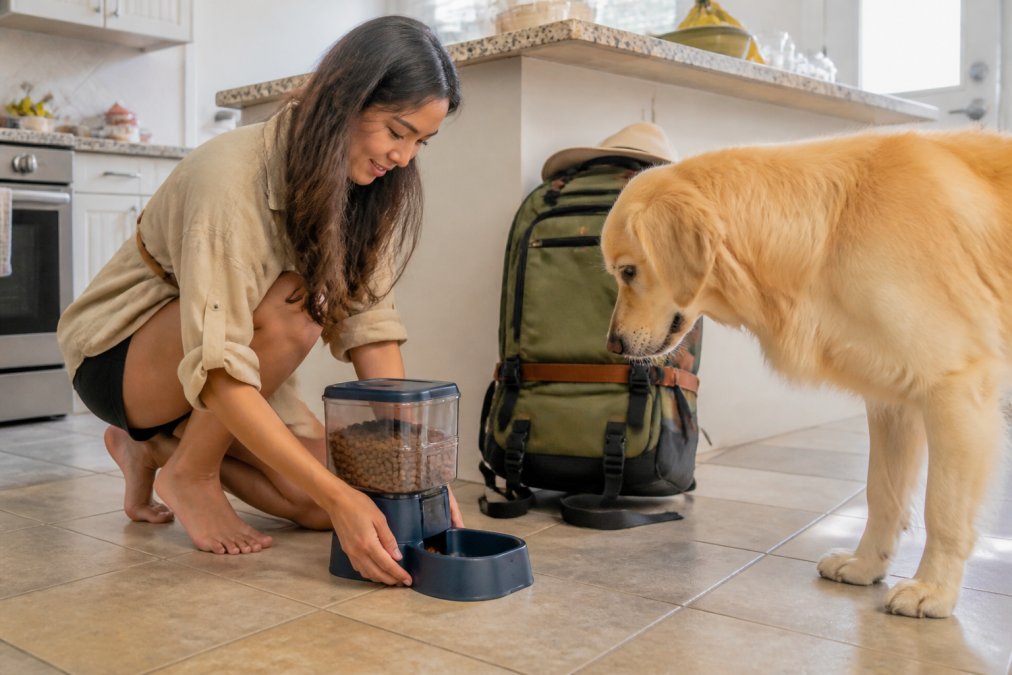
No Batteries, No Timers, No Power Outlets Required
A gravity feeder needs zero electricity, removing the biggest travel risk: arriving to a dead unit and an empty bowl. There are no timers to reset after a time zone change and no low battery indicator to watch, the food level in the hopper is your status readout.
Portability and Setup in Minutes
Setup takes minutes, not an afternoon. Empty any remaining kibble, secure the hopper, and pack the unit flat. On arrival, fill the hopper, seat the bowl, and you are done. Most gravity feeders break into two or three pieces, so they pack into a car boot or suitcase without drama.
How to Keep Pet Food Fresh While Traveling
Keeping pet food fresh while traveling comes down to two things: blocking air and matching hopper size to trip length. Dry kibble stays palatable far longer sealed from humid air, and a hopper that empties within a few days avoids stale food at the bottom.
Airtight Seals and Desiccant Bags
An airtight seal on the hopper lid is the difference between crisp kibble and soft, unappealing food. Humidity is the main enemy; a sealed lid plus a food-safe desiccant bag absorbs the moisture that sneaks in each time you open the top. Swap the bag at the start of every trip.
Hopper Capacity and Trip Length
Match capacity to how long you will be gone. A hopper sized for a long weekend will not leave a week's worth of food going stale. As a rule of thumb, one cup of dry food per 10 pounds of body weight per day is a reasonable starting estimate, then adjust for your pet's size and appetite.
| Trip Length | Hopper Size to Aim For | Freshness Check |
|---|---|---|
| 1-2 days | Small, 2-4 cups | Refill daily |
| 3-4 days | Medium, 6-10 cups | Add desiccant bag |
| 5+ days | Large, 12+ cups | Consider a sitter check-in |
Maintaining Pet Feeder Hygiene on the Road
Maintaining pet feeder hygiene on the road is easier than most owners expect, because gravity feeders have few parts and no electronics to keep dry. But travel introduces two problems home feeders rarely face: rental kitchens without a drying rack, and humid car boots where a damp hopper becomes a mold incubator within 48 hours.
Cleaning Stainless Steel Bowls and Hoppers
A stainless steel bowl is the easiest surface to keep clean, and most are dishwasher safe, which matters in a rental kitchen. For the hopper, follow a three-step routine:
- Empty and dry-pour. Tip out all remaining kibble into a zip bag, do not wash kibble down a rental sink, it clogs traps.
- Wash with warm soapy water. Use a bottle brush to reach the dispensing channel; a narrow channel is where old kibble oils collect and turn rancid.
- Dry completely before refilling. Trapped moisture turns into mold fast. If you have no drying rack, stand the hopper upside down on a clean towel near an open window for at least two hours.
Keeping Water Fresh During Multi-Day Trips
Water goes stale faster than food, and on the road the risk is higher because you may top up from unfamiliar taps with different mineral content. Rinse the reservoir daily and top it up with fresh water rather than letting a half-empty bowl sit for days. If your pet is picky about water, a clean reservoir and daily refresh usually keeps them drinking normally.
Travel-Specific Hygiene Traps Competitors Skip
Most guides assume you are cleaning at home with a full kitchen. On the road, three traps catch owners out:
- Hotel and rental sinks. Never wash feeder parts in a sink you also use for food prep without sanitizing afterward. Kibble residue carries bacteria that can cross-contaminate.
- Car boot heat. A hopper left in a hot car between stops can hit temperatures that accelerate mold and stale oils. Pack it in the passenger cabin, not the boot, on warm days.
- Shared water bowls at pet-friendly stops. If your pet drinks from a communal bowl at a rest stop, rinse your own reservoir before refilling to avoid transferring whatever was in the shared bowl.
Choosing the Best Pet Feeder for Travel: What Actually Matters
Choosing the best pet feeder for travel comes down to more than portion control and anti-jam design. The criteria that separate a feeder that works on a weekend trip from one that fails in a hotel room are travel-specific: how it packs, how it behaves when the Wi-Fi drops, and how it holds up after months of use.
Portability: Weight, Suitcase Fit, and Car-Power Compatibility
A feeder that lives on your kitchen floor is not automatically a feeder that travels. Three portability checks matter before you buy:
- Packed weight. A full hopper of kibble is heavy. Weigh the empty feeder first, anything over about 3 pounds empty is awkward to carry through a hotel lobby alongside a pet carrier. Gravity feeders break into two or three pieces and pack flat; many electronic units have a fixed base and a bulky hopper that does not nest.
- Suitcase and car-boot fit. Measure the disassembled footprint, not the assembled one. A feeder that fits a car boot may not fit a carry-on, and one that fits a carry-on may not hold enough for a week. For air travel, a collapsible silicone bowl plus a small gravity hopper is usually the practical ceiling.
- Car-power compatibility. If you rely on an electronic feeder, check whether it runs on USB-C, a 12V car adapter, or proprietary batteries. A feeder that only runs on a wall adapter is useless on a road trip. Gravity feeders sidestep this entirely, which is why they remain the default recommendation for car travel.
Remote Troubleshooting: What Happens When Wi-Fi Fails
This is the gap almost every competitor misses. If you travel with an app-controlled feeder and the hotel Wi-Fi drops, or the feeder loses connection while you are out, you need a plan before you leave, not after.
A practical pre-trip checklist:
- Confirm the feeder's offline behavior. Some units continue dispensing on their last schedule when disconnected; others stop entirely. Check the manual or test it at home by unplugging your router for an hour.
- Set a backup feeding method. Pack a measured portion of kibble in a sealed bag and a collapsible bowl. If the feeder goes offline, you or a sitter can feed manually.
- Screenshot your schedule. If the app resets or you need to reconfigure on a weak connection, a screenshot saves you from rebuilding the schedule from memory.
- Know the manual override. Many electronic feeders have a manual dispense button. Find it before you travel, not during a 2 a.m. connectivity failure.
Long-Term Reliability: What First Impressions Miss
Most reviews are written after a week of use. The failures that matter for travel show up later: motors that weaken after months of daily dispensing, seals that dry out and let humidity in, and battery compartments that corrode in humid climates. Ask three questions first-impression reviews cannot answer:
- What is the warranty length? A one-year warranty signals the manufacturer expects the unit to last; a 90-day warranty suggests otherwise.
- Are replacement parts available? Hoppers, seals, and dispensing augers wear out. A feeder with no replacement parts is disposable.
- What do long-term owners say? Look for reviews written six months or more after purchase, not the launch-week reviews that dominate search results.
Pet Anxiety and Feeder Transition Tips
A new feeder in a strange room can unsettle an anxious pet. Introduce it at home first, in the pet's usual spot, for several days before you travel. Bring a familiar blanket or toy to place beside it on the road. If your pet is used to scheduled meals, feed a portion by hand at the usual times for the first day or two so the routine feels familiar.
Common Mistakes to Avoid When Traveling With a Pet Feeder
The most common mistake is introducing a brand-new feeder on the road, when your pet is already stressed by unfamiliar surroundings and a changed routine. Test it at home first.
- Filling the hopper to the brim for a short trip, which leaves stale food at the bottom
- Skipping the desiccant bag, so humid air softens the kibble within a day
- Placing the feeder in direct sunlight or next to a heat source
- Forgetting to rinse the water reservoir daily
- Packing the feeder without emptying it, so kibble spills in transit
- Assuming a picky pet will adapt instantly to a new bowl in a new room
Conclusion: Stress-Free Feeding on Every Trip
Travel already asks a lot of you and your pet. The feeding setup should not be the part that keeps you up at night. A gravity-fed system removes the batteries, timers, and connectivity worries, so your pet eats on their own terms while you are out.
Frequently Asked Questions
Can I leave my cat alone for 2 days with an automatic feeder?
It depends on the feeder type. Gravity-fed models like FEASTY PAWS hold enough dry food and water for 2-3 days, making them a practical option for short trips. Electronic feeders with timers also work but require battery backup or a power source. For any feeder, test it for a day before your trip to confirm portion accuracy and that your cat actually eats from it. Always arrange a check-in for trips longer than 48 hours.
What are the benefits of gravity feeders for pet travel?
Gravity pet feeder benefits for travel include no batteries or timers, no power outlet needed, lightweight portability, and simple setup. Food and water dispense automatically as your pet eats or drinks, so supply stays consistent without electronics that can fail. They are easy to clean and pack, which matters when you are moving between locations. For pet owners who prioritize mechanical reliability over app-controlled features, gravity feeders remove the risk of connectivity issues or dead batteries mid-trip.
How do I keep my pet's water fresh while I'm away?
Use a gravity-fed water dispenser with an airtight seal to limit exposure to air and debris. Change the water every 24-48 hours, rinse the reservoir, and keep the unit out of direct sunlight. If your pet is picky about water, as many cats are, a stainless steel bowl is easier to keep clean and does not hold odors the way plastic can. For multi-day trips, a larger reservoir reduces the need for refills and keeps water available continuously.
Do vets recommend automatic feeders for travel?
Many vets support automatic feeders for short trips because they maintain scheduled meal times and reduce stress for pets used to a routine. The key is consistency. If your pet has separation anxiety or a medical condition requiring precise portions, discuss the feeder with your vet first. Gravity feeders work well for free-feeding pets, while timed electronic models suit pets on strict schedules. Whichever you choose, introduce it at home before relying on it during travel.