
Table of Contents
- Gravity Fed Water Bowl Benefits: Why They Work for Busy Pet Parents
- Pros and Cons of Gravity Water Dispensers
- Capacity, Material, and Stability: What to Check Before Buying
- How to Clean a Gravity Water Dispenser (Step-by-Step)
- Dog Food Storage Containers: Keeping Kibble Fresh Alongside Water
- Travel Pet Water Solutions: Using Gravity Feeders on the Go
- Troubleshooting Common Gravity Feeder Problems
- Conclusion: Is a Gravity Fed Water Bowl Right for Your Pet?
- Frequently Asked Questions
Last Updated: October 2, 2026
Gravity Fed Water Bowl Benefits: Why They Work for Busy Pet Parents
A gravity fed water bowl is a non-electric pet water dispenser that refills itself from a sealed reservoir as your pet drinks, using atmospheric pressure and gravity. For households where nobody is home for ten hours, it solves the most common pet care failure: an empty bowl at 3pm. This guide from FEASTY PAWS covers how these dispensers work, where they fall short, and how to keep the water genuinely fresh.

The catch: "automatic" does not mean "maintenance-free," and most product pages skip that part.
Below, we cover the mechanics, pros and cons, a cleaning routine that prevents biofilm, and the failures that quietly turn a working dispenser into a dry one.
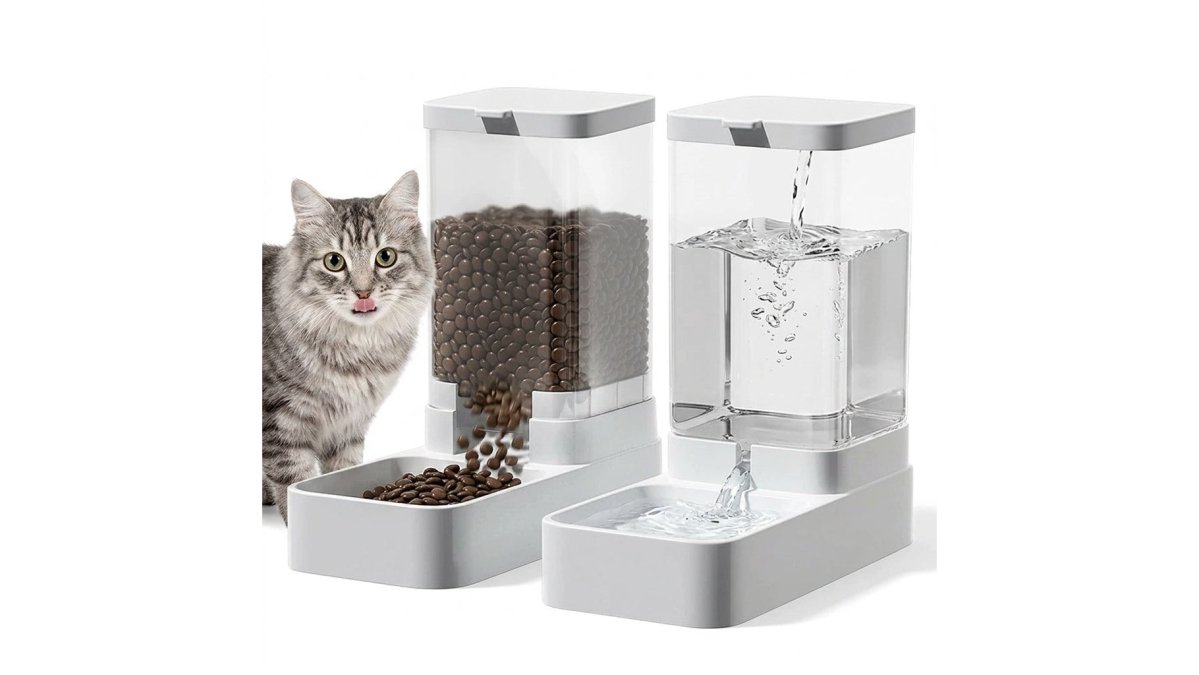
How Gravity-Fed Dispensers Work Without Electricity
The mechanism is a vacuum seal, not a pump. Fill the inverted reservoir, screw on the base, and flip it upright.
That cycle is why these units need no batteries, timers, or power outlet. It also means the reservoir must stay sealed: a cracked cap or warped gasket breaks the vacuum, and the unit either floods or stops feeding entirely.
The American Veterinary Medical Association guidance on pet hydration notes that cats in particular drink little and dehydrate easily, which makes continuous water access more than a convenience. A dispenser that keeps the trough filled around the clock supports that.
Pros and Cons of Gravity Water Dispensers
Gravity dispensers trade precision for reliability: continuous supply and zero electronics, but a reservoir that needs regular cleaning and a flow rate you cannot control. Whether that trade works depends on your household.
Advantages: Convenience, Reliability, and Cost
The strongest case for gravity feeding is that nothing can fail electronically: no pump to burn out, no app to disconnect, no battery to die while you are at work. A piston design or simple valve has almost nothing to break.
- Non-electric operation means it works during a power cut and on a camping trip
- Cost is a one-time purchase rather than a subscription or replacement filters
- Capacity of larger units covers a multi-pet household through a working day
- Setup takes about two minutes, with no pairing or configuration
For owners who travel occasionally, that mechanical simplicity is the whole point.
Limitations: Capacity, Cleaning, and Water Quality
A gravity feeder delivers water, but it does not circulate or filter it. Standing water in an open trough collects dust, saliva, and kibble crumbs, and bacterial growth accelerates in warm rooms.
- Biofilm builds on the reservoir walls and valve seat, usually within a week
- Over-drinking is possible if a pet finds the constant supply stimulating
- Stability matters, since a large reservoir is top-heavy when full
- No filtration unless you choose a fountain model with a filter stage
Capacity, Material, and Stability: What to Check Before Buying
Three specs decide whether a gravity feeder works in your home: capacity, material, and whether it stays upright when a large dog leans on it.
| Check | Why It Matters | What to Look For |
|---|---|---|
| Capacity | Determines refill frequency | Larger reservoir for multi-pet homes |
| Material | Affects hygiene and durability | BPA-free plastic or stainless steel |
| Base width | Prevents tipping | Wide, weighted base |
| Valve type | Controls flow reliability | Simple piston or spring valve |
| Seal quality | Maintains the vacuum | Replaceable gasket |
For a single cat, a smaller unit refilled every couple of days is plenty. For two large dogs, get the biggest reservoir you can keep clean, because a unit you dread cleaning is a unit you stop cleaning.
BPA-Free and Stainless Steel Options
Material choice comes down to hygiene versus weight. BPA-free plastic is lighter, cheaper, and easier to move when full, but it scratches, giving bacteria somewhere to settle. Replace plastic reservoirs once the surface stops feeling smooth.
Stainless steel resists scratching and does not hold odors, so it stays cleaner longer. It costs more and is heavier, and a full stainless reservoir is awkward to lift and invert.
How to Clean a Gravity Water Dispenser (Step-by-Step)
Most guides treat cleaning as a chore list. The reason it matters is biofilm, and understanding it separates a genuinely clean dispenser from one that merely looks clean.
Biofilm is a community of microorganisms that stick to a surface and secrete a protective matrix. In a gravity feeder, the surfaces that matter most are the reservoir's inside wall and the valve seat.
The realistic cleaning cadence
- Daily: dump and rinse the trough. This takes thirty seconds and removes saliva, kibble dust, and the film that starts forming the moment your pet drinks.
- Every two to three days: refill with fresh water rather than topping up. Topping up concentrates whatever has already dissolved into the standing water.
- Weekly: full disassembly and wash. This is the non-negotiable one.
- Monthly: descale the valve and any hard-water areas with a vinegar soak, especially if you live in a hard-water region.
- Every few months: inspect the reservoir surface. If it feels rough or holds a smell after washing, the material has degraded and the unit needs replacing, not more scrubbing.
Step-by-step
- Empty and disassemble. Pour out remaining water, then separate the reservoir, base, trough, and any gasket or valve parts. Do not skip the gasket. It is the most-forgotten component and a common biofilm reservoir.
- Rinse the trough daily. A quick rinse before residue bonds to the surface is worth more than a hard scrub later.
- Wash weekly with warm soapy water. Use a bottle brush sized for the reservoir; the bottom third is where biofilm establishes first because it stays wettest longest.
- Scrub the valve seat. A soft brush or cotton swab clears the mineral film that restricts flow. Do not use anything abrasive on the valve, since scratches there cause leaks.
- Descale monthly with white vinegar. A 1:1 vinegar-to-water soak for fifteen to thirty minutes dissolves calcium and magnesium deposits. Rinse thoroughly afterward.
- Rinse thoroughly. Soap and vinegar residue both change the taste of the water, and picky cats will notice before you do.
- Air dry completely. Reassembling a damp unit traps moisture against the seal and gives biofilm a head start.
- Refill with fresh water. Never top up old water.
Expected result: a reservoir that smells neutral and feels smooth to the touch. If it still smells after washing, the plastic has absorbed odor and the unit needs replacing.
When cleaning is not enough
There is a point where maintenance stops being the answer. If the reservoir surface is permanently rough, a sour smell returns within a day of washing, or the plastic has yellowed and gone cloudy, the material has degraded past sanitizing. Replace the reservoir or the whole unit. This is also the strongest argument for stainless steel, which does not develop the same scratch-and-absorb problem.
Automatic Pet Feeder and Water Dispenser →
Dog Food Storage Containers: Keeping Kibble Fresh Alongside Water
If you are setting up a gravity water system, the food side deserves the same treatment. Dog food storage containers that seal properly keep kibble from going stale, and stale kibble is a main reason pets walk away from a full bowl.
The practical pairing: an airtight container for dry food and a gravity-fed dispenser for water, both in the same feeding station.
On storage hygiene: kibble leaves oil residue inside containers, and that residue goes rancid. Wipe the container out between refills rather than pouring new food on top of the old. Clean surfaces keep contents fresh.
FEASTY PAWS makes this easy with an Automatic Pet Feeder and Water Dispenser that combines both functions in one gravity-fed unit.
Travel Pet Water Solutions: Using Gravity Feeders on the Go
Travel pet water solutions fall into two camps: portable bottles for short trips and full gravity units for longer stays. Gravity feeders travel well, provided you empty them before you move.
A full reservoir sloshing in a car boot breaks the vacuum seal and leaks through the valve. Drain the unit, pack it upside down with the base removed, and refill at your destination.
If you want a filtered option for travel, the Innovation Award Winner 95oz Pet Fountain uses a five-stage filtration system with a quiet pump, though it does require power, so it suits destination stays rather than camping. Replacement filters are available separately as a Cat Water Fountain Filter.


Troubleshooting Common Gravity Feeder Problems
Most gravity feeder failures trace back to the vacuum seal or the valve, and both are fixable in minutes. A dispenser that has quietly stopped feeding is worse than no dispenser at all.
| Problem | Likely Cause | Fix |
|---|---|---|
| Water will not flow | Blocked valve or no air inlet | Clear the valve seat, check the cap vent |
| Unit floods the base | Broken vacuum seal | Reseat or replace the gasket |
| Slow drip only | Mineral buildup | Descale with a vinegar soak |
| Water tastes off | Biofilm or old water | Full deep clean, replace water |
| Unit tips over | Top-heavy when full | Move to a corner or wider base |
The Pet Food Institute guidance on safe food and water handling makes the broader point that clean water access is a baseline requirement, not an optional extra, which is why troubleshooting a stalled dispenser promptly matters.
Conclusion: Is a Gravity Fed Water Bowl Right for Your Pet?
Gravity feeding suits households that value mechanical reliability over electronic features.
The trade-off is maintenance, not capability. A gravity fed water bowl keeps water available; keeping it fresh is your job.
At FEASTY PAWS, the all-day feeder was built by pet parents who wanted exactly that balance: gravity-fed food and water, no batteries or timers, free shipping, and a 30-day money-back guarantee.
Frequently Asked Questions
What is a gravity-fed water system for pets?
A gravity-fed water system uses a reservoir that refills the bowl automatically as your pet drinks. When the water level drops, a vacuum seal releases more water from the tank. No electricity, batteries, or pumps are needed. The FEASTY PAWS Automatic Pet Feeder and Water Dispenser uses this design to provide a consistent water supply for dogs and cats throughout the day.
How often should you clean a gravity-fed water bowl?
Clean the bowl and reservoir weekly with warm soapy water. Biofilm and bacteria build up faster than most owners expect, especially in warm rooms. If you notice slimy residue or a cloudy tank, clean immediately. For fountains with filters, replace the filter every 2-3 weeks to keep water fresh and the pump running smoothly.
Are gravity-fed water bowls safe for all pets?
They work well for most dogs and cats, but supervision matters. Puppies or dogs that gulp water may overflow the bowl or drink too quickly. Cats with sensitive whiskers often prefer wide, shallow bowls. If your pet has a medical condition affecting thirst or urination, ask your vet before switching. For healthy pets, a gravity-fed bowl offers reliable hydration without complex electronics.
Will a gravity water dispenser keep water fresh enough for a picky cat?
Freshness depends on cleaning frequency and water quality. Gravity dispensers keep water circulating only when the bowl refills, so stagnant water can develop biofilm within days. Rinse and refill every 1-2 days, and clean the reservoir weekly. Some owners pair a gravity bowl with a filtered fountain like the FEASTY PAWS 95oz Pet Fountain, which circulates water and uses a 5-stage filtration system to improve taste.
The hard part of pet care is not the feeding itself, it is the worry that comes with being away. FEASTY PAWS exists to remove that worry, with a gravity-fed all-day feeder that needs no batteries, no timers, and no app, backed by free shipping and a 30-day money-back guarantee. Get started with FEASTY PAWS and spend less time checking the bowl and more time with your pet.