
Table of Contents
- How Gravity and Automatic Pet Feeders Work
- Automatic Pet Feeder Pros and Cons
- Portion Control and How to Prevent Overeating in Pets
- Maintaining Pet Feeder Hygiene for Both Types
- Power, Reliability, and Multi-Pet Households
- Cost Comparison: Gravity vs Automatic Pet Feeders
- Conclusion
- Frequently Asked Questions
Last Updated: October 2, 2026
How Gravity and Automatic Pet Feeders Work
Choosing between automatic vs gravity pet feeders comes down to one question: do you want food available all day, or delivered on a schedule? The answer depends less on technology and more on your pet's temperament. Gravity feeders rely on simple physics. Automatic feeders rely on timers and power. Both keep your pet fed, but they solve different problems.
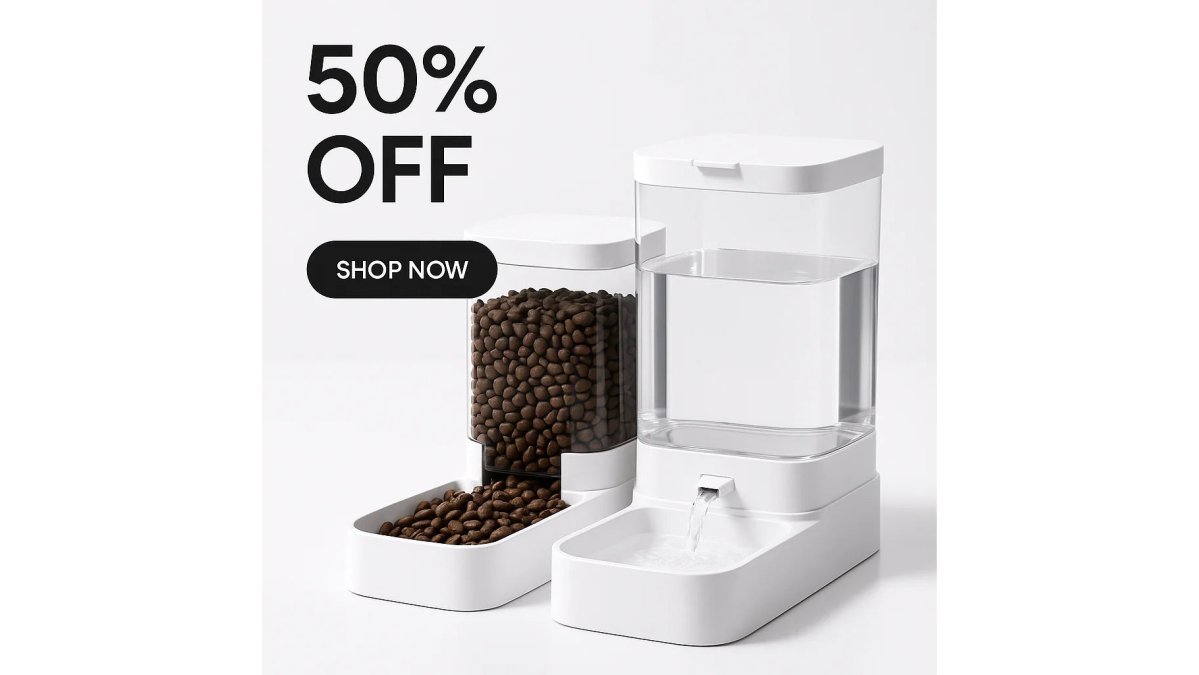
Gravity Feeders: Simple Mechanics, Constant Supply
A gravity feeder is a food storage container that releases kibble into a bowl as your pet eats, using nothing but gravity and a dispensing mechanism. Fill the reservoir, and food flows down a chute into the bowl until it reaches a set level. When your pet eats, more kibble drops to replace it. No batteries, no timers, no power outage worries.

Automatic Feeders: Timers, Portions, and Power
An automatic feeder dispenses measured portions at scheduled times using an electronic timer or app-controlled settings. You program the feeding schedule, and the dispensing mechanism releases a set amount of kibble into the bowl. These units run on batteries, mains power, or both. The appeal is portion control and consistency. The trade-off is complexity: more parts to clean, more things that can fail, and a hard dependency on power or battery backup.
Automatic Pet Feeder Pros and Cons
Automatic pet feeders win on precision and lose on simplicity. The pros: exact portion control, scheduled feeding that supports weight management, app-controlled convenience for travel, and automated scheduling that keeps routines consistent. The cons: they need power or batteries, the dispensing mechanism can jam, and they cost more upfront. A common mistake is buying an automatic feeder for a pet with separation anxiety, hoping a machine solves a behavioral issue.
Portion Control and How to Prevent Overeating in Pets
Preventing overeating in pets starts with understanding that free-feeding and portion control are opposites. Gravity feeders are free-feeding by design: food is always available. That works beautifully for some animals and poorly for others.
- Self-regulators eat when hungry and stop when full. Gravity feeders suit them well.
- Overeaters empty the bowl every time it refills. They need measured portions.
- Multi-pet homes complicate everything, since one pet may eat another's share.
Maintaining Pet Feeder Hygiene for Both Types
Maintaining pet feeder hygiene matters more than most owners realize, because food spoilage and bacteria build up quietly. Kibble leaves oily residue that turns rancid over time. Water bowls grow biofilm within days. The cleaning routine differs by type, and it also depends on what you're feeding.

| Feeder Type | Cleaning Frequency | Key Trouble Spots | Time per Clean |
|---|---|---|---|
| Gravity feeder | Weekly full wash | Reservoir, chute, bowl | 10-15 minutes |
| Automatic feeder | Weekly plus hopper check | Dispensing mechanism, hopper, bowl | 15-25 minutes |
| Either type, wet food | After every meal | Bowl, any surface touching food | 5 minutes |
Cleaning a Gravity Feeder
Disassemble the reservoir, chute, and bowl. Wash with warm soapy water, rinse thoroughly, and dry completely before refilling. Moisture left in the hopper causes kibble to clump and jam the chute, this is the most common cause of gravity feeder failure, and it is entirely preventable. If your feeder has a narrow chute, a bottle brush reaches the corners a sponge cannot.
Cleaning an Automatic Feeder
Automatic feeders need the same treatment plus a check of the dispensing mechanism. Kibble dust accumulates around the auger or rotor and causes jams. Some hoppers and bowls are dishwasher-safe; check the manufacturer's instructions before assuming. Never submerge the electronic base, wipe it down with a damp cloth and let it dry fully before reinstalling the hopper.
Food Freshness and Spoilage
Kibble is shelf-stable in a sealed bag, but once it sits in an open hopper, it starts absorbing moisture and odors from the air. A few practical rules:
- Refill only what your pet will eat in about a week. Topping off a gravity feeder for weeks at a time means the oldest kibble at the bottom may sit there far longer than intended.
- Keep the hopper sealed. A lid that closes properly slows moisture uptake and keeps pests out.
- Discard clumped or damp kibble. Clumping is a sign of moisture, and moisture is a sign of potential mold.
- Wash the hopper between refills, not just when it looks dirty. Oily residue is invisible but goes rancid.
Wet Food vs Dry Kibble: A Critical Compatibility Note
This is the point most comparison articles skip: neither gravity feeders nor standard automatic feeders are designed for wet food. Wet food spoils quickly at room temperature, often within a couple of hours, and it clumps, sticks, and clogs dispensing mechanisms. Leaving wet food in a gravity feeder or a standard automatic hopper is a food-safety problem, not just a mechanical one.
- Feed wet food by hand on a schedule, and use a gravity or automatic feeder only for dry kibble between meals.
- Use a feeder specifically designed for wet food, which typically includes a sealed compartment and a cooling element. These exist but are a separate product category from standard automatic feeders.
- Use a rotating tray feeder that holds pre-portioned wet food and rotates to expose one portion at a time. These still require the food to be safe at room temperature for the duration, so they work best for short absences, not multi-day trips.
Power, Reliability, and Multi-Pet Households
Power and reliability separate the two designs sharply, and this is where most buying decisions actually get made. Gravity feeders need no power at all, which makes them dependable during an outage and immune to electronic failure. Automatic feeders depend on batteries or mains power, and most include battery backup, but the dispensing mechanism can still jam, drift out of calibration, or fail silently.
Power Requirements at a Glance
- Gravity feeders: zero power. No batteries, no cord, no outlet. The only failure mode is a clogged chute or an empty hopper.
- Battery-only automatic feeders: typically run on 3-4 D-cell batteries or a similar pack. Battery life varies widely by model and feeding frequency, so check the manufacturer's estimate and replace on schedule rather than waiting for a low-battery alert.
- Mains-powered automatic feeders: plug into a wall outlet and usually include a battery compartment as backup. If the cord is unplugged or the outlet fails, the unit falls back to battery mode, but only if batteries are installed and fresh.
- Hybrid feeders: run on mains power with rechargeable or disposable battery backup. These offer the most resilience, at the highest upfront cost.
A common pattern is owners relying on battery backup that was installed months ago and never checked. Treat battery replacement like a recurring calendar reminder, not a one-time setup step.
What Happens When an Automatic Feeder Fails
Automatic feeders fail in three main ways, and each has a different fix:
- The dispensing mechanism jams. Kibble dust, moisture, or an oversized kibble piece blocks the auger or rotor. The feeder may keep 'running' on schedule while dispensing nothing. Fix: disassemble and clean the mechanism, then test with a full cycle before relying on it again.
- The power fails and the backup is dead or missing. The unit stops entirely. Fix: keep fresh batteries installed even on mains-powered units, and test the backup by unplugging the feeder for one full scheduled cycle.
- The schedule drifts or resets. Some units lose their programming after a long outage. Fix: after any outage longer than a few hours, verify the clock and schedule before the next meal.
Multi-Pet Households: The Food-Theft Problem
Multi-pet households add a layer most buying guides skip entirely. With a gravity feeder, dominant pets often guard the bowl and eat more than their share, while shy or slower pets go hungry. This is the single biggest reason multi-pet owners move away from gravity systems, and it has nothing to do with the feeder's build quality.
Automatic feeders help, but only in specific configurations:
- One feeder per pet, in separate rooms. The simplest and most reliable fix. Each pet gets its own station, and food theft becomes a logistics problem rather than a technology problem.
- Microchip-reading feeders. These open only for the pet whose chip is registered, which solves food theft directly. They cost considerably more than standard automatic feeders and require each pet to be microchipped.
- Split-bowl automatic feeders with two compartments. These dispense two portions at once, but they do not stop a fast eater from finishing first and pushing the slower pet away.
Cost Comparison: Gravity vs Automatic Pet Feeders
Gravity feeders cost less upfront and almost nothing to run. Automatic feeders cost more to buy and add ongoing battery costs. The gap widens over time, since automatic units also tend to need replacement sooner because of electronic wear.
| Factor | Gravity Feeder | Automatic Feeder |
|---|---|---|
| Upfront cost | Lower | Higher |
| Power needs | None | Batteries or mains |
| Ongoing costs | None | Battery replacement |
| Lifespan | Long, few moving parts | Shorter, electronic wear |
| Best for | Self-regulators, travel supply | Portion control, schedules |
Conclusion
The right feeder depends on your pet, not on which machine has more features. Self-regulating pets thrive on gravity-fed simplicity, while overeaters and multi-pet homes often need measured portions and scheduled feeding. Whichever you choose, match the system to your pet's habits and your daily routine.
Frequently Asked Questions
Are gravity feeders better than automatic feeders?
Neither is universally better. Gravity feeders suit owners who want zero electronics, no batteries, and a constant food supply for pets that self-regulate. Automatic feeders work better for scheduled meals, portion control, and pets prone to overeating. Your choice depends on your pet's temperament, your travel schedule, and whether you need precise portioning.
What are the common problems with gravity feeders?
Gravity feeders can allow overeating in pets that don't self-regulate, and kibble at the bottom of the hopper may sit for days and lose freshness. Moisture can cause clumping or jamming in the dispensing mechanism. They also make it hard to feed multiple pets different amounts, since food is available to any pet that reaches the bowl.
What are the disadvantages of using an automatic pet feeder?
Automatic feeders rely on power or batteries, so a power outage or dead battery can skip a meal. The dispensing mechanism can jam with irregular kibble shapes. They cost more upfront, and some pets are startled by the motor noise. Cleaning small internal parts takes more effort than wiping a gravity bowl.
Which feeder type is best for weight management?
Automatic feeders give you the most control for weight management because you set exact portions on a schedule. If your pet overeats from a gravity feeder, switching to measured automatic meals is the more reliable fix. Pair either feeder with a consistent feeding routine and regular weight checks with your vet.
Picking the wrong feeder creates daily friction: jams, overeating, or a pet that refuses to drink. FEASTY PAWS makes the choice easier with a gravity-fed all-day feeder that needs no batteries or timers, ships free in two business days, and is backed by a 30-day money-back guarantee. Designed by pet parents for pet parents, it keeps food and water available so you can worry less and enjoy more playtime. Get started with FEASTY PAWS and give your pet a feeding routine that simply works.